54 Core Surgical Instruments Explained with Medical Uses
Surgical procedures are heavily reliant on specialised instruments. These surgical instruments are essential parts of modern medicine and surgery, as they allow physicians to cut, grasp, clamp, retract, and suture tissues during surgical procedures.
Across the globe, hospitals and clinics rely on high-quality surgical equipment to ensure a safe, accurate surgical environment for patients. Top surgical equipment is made of high-grade stainless steel, ensuring durability, cleanliness, and performance. All surgical instruments are designed for a specific purpose in the operating room, regardless of whether they are used in general surgery, orthopaedic surgery, gynaecology, or ophthalmology.
The table below provides a detailed description of 54 surgical instruments and their use.
54 Surgical Instruments with Medical Uses
|
Sr. No. |
Surgical Instrument |
|
|---|---|---|
| 1 | Forceps | Used during an operation to hold & manipulate tissues and other items. |
| 2 | Retractor | Used to hold an incision open, allowing better access to the surgical site. |
| 3 | Scalpel | Used for making an exact surgical incision in tissue. |
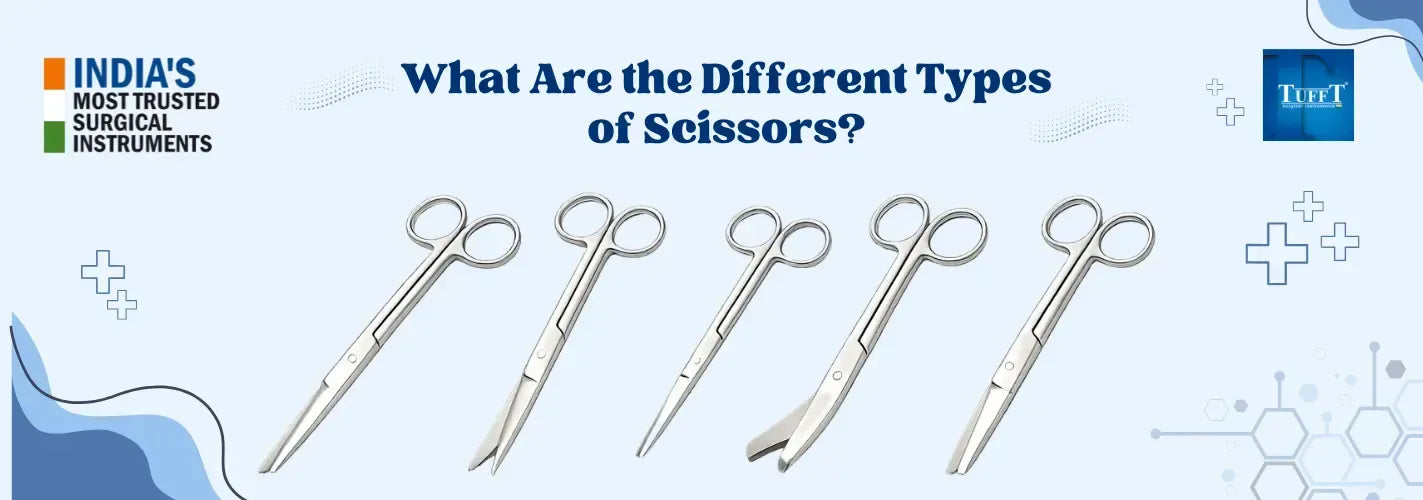
| 4 | Surgical Scissors | Used to cut tissue, cut suture, and cut other equipment used in surgery. |
| 5 | Tissue Forceps | Used to hold delicate tissues securely. |
| 6 | Trocar | Provides a means of entering the surgical area for surgical instruments, typically used in minimally invasive surgery. |
| 7 | Needle Holder | Holds the surgical needle during suturing. |
| 8 | Speculum | Used for examination of body cavities and for providing access to a surgical site. |
| 9 | Surgical Drill | Used for drilling holes in the bone for use with surgical instruments when doing surgery on the bone. |
| 10 | Curette | Scrapes tissue for diagnosis and surgical procedures. |
| 11 | Rongeur | Removes layers of small bone or tissue. |
| 12 | Bone Saw | Cuts through bone during orthopedic procedures. |
| 13 | Surgical Stapler | Closes a wound or incision with speed. |
| 14 | Sutures | Used to sew wounds or surgical incisions together. |
| 15 | Anoscope | Examines the anal canal and rectum. |
| 16 | Surgical Retractor | Keeps tissues apart for better surgical visibility. |
| 17 | Tenotomy Scissors | Cuts delicate tendons. |
| 18 | Clip Applier | Applies clips or devices that hold blood vessels or ducts closed. |
| 19 | Biopsy Punch | Removes small pieces of tissue from the body for testing in a laboratory. |
| 20 | Retinal Scissors | Used to cut very small amounts of tissue when performing surgery on the eyes. |
| 21 | Ligature Carrier | Helps tie ligatures around blood vessels. |
| 22 | Bulldog Clamp | Temporarily clamps blood vessels. |
| 23 | Electrocautery Device | Uses heat to cut tissue or stop bleeding. |
| 24 | Endoscope | Allows viewing inside the body using a camera. |
| 25 | Gastroscope | Used to examine the stomach and upper digestive system. |
| 26 | Tonsillectomy Instrument | Used to remove tonsils. |
| 27 | Rib Spreader | Spreads ribs apart during thoracic surgery. |
| 28 | Nasal Speculum | Allows examination of the nasal cavity. |
| 29 | Ophthalmoscope | It examines the internal structures of the eye. |
| 30 | Grafting Knife | Used in skin grafting procedures. |
| 31 | Rib Shears | Cuts ribs during thoracic surgery. |
| 32 | Spinal Needle | Used to administer spinal anesthesia or collect spinal fluid. |
| 33 | Cannula | Insert or drain fluids from the body. |
| 34 | Bone Clamp | Holds bones firmly during orthopedic procedures. |
| 35 | Vascular Clamp | Controls blood flow in blood vessels. |
| 36 | Dermal Curette | Used to scratch or scrape away lesions or bad tissue from the skin. |
| 37 | Abdominal Retractor | Used during surgery to hold incisions open in the abdomen. |
| 38 | Episiotomy Scissors | Used during pregnancy to cut the skin & tissues on the vaginal opening, creating a controlled birth. |
| 39 | Catheter | Drains fluid from the body or delivers medication to the body. |
| 40 | Dermatome | Removes thin layers of skin for grafting procedures. |
| 41 | Thoracic Trocar | Used to insert chest tubes. |
| 42 | Cystoscope | Examines the inside of the urinary bladder. |
| 43 | Vein Stripper | Used to remove veins when treating varicose veins. |
| 44 | Endocervical Curette | Used to take samples of tissue from inside the cervical canal for testing. |
| 45 | Trocar Cannula | Used for fluid drainage or instrument insertion. |
| 46 | Uterine Sound | Measures the depth of the uterus. |
| 47 | Hernia Clamp | Assists during hernia repair surgeries. |
| 48 | Bronchoscope | Examines the airways and bronchus. |
| 49 | Suture Passer | Used to pass a suture through tissue during surgery. |
| 50 | Babcock Forceps | Grasp and hold delicate tissue without damaging it. |
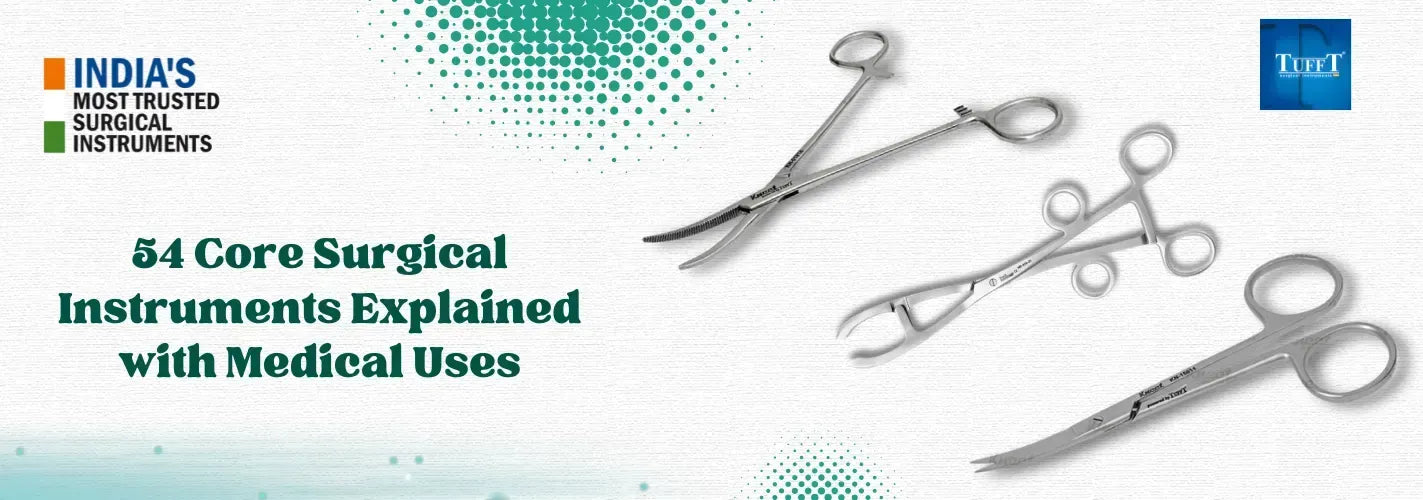
| 51 | Hemostat | Used to clamp the blood vessels to stop bleeding. |
| 52 | Myringotomy Knife | Used to make a small incision in the eardrum. |
| 53 | Bone Chisel | Used to cut or shape the bone. |
| 54 | Tissue Scissors | Used to cut delicate tissues. |
Categories of Surgical Instruments
Most surgical tools fall into a few primary categories based on their function during medical procedures.
1. Cutting and Dissecting Instruments
This category of tools is used during surgery for cutting tissue, sewing, and dressing.
Common examples include:
-
Scalpels – Used to create precise surgical cuts.
-
Surgical Hardage Scissors – Designed for delicate tissue cutting.
-
Mayo Scissors – Used to cut thick tissues.
-
Metzenbaum Scissors – Ideal for delicate tissue dissection.
High-quality Surgical Hardage Scissors are essential in procedures requiring fine cutting precision.
2. Grasping and Holding Instruments
Instruments used to grasp tissue, hold a dressing, or hold other surgical items.
Some common instruments include:
-
Surgical Forceps
-
Dressing forceps
-
Tissue forceps
-
Thumb forceps
-
Allis tissue forceps
Surgeons use surgical forceps to grip and hold delicate tissue in almost all surgical cases without causing harm to the tissue.
3. Clamping and Occluding Instruments
Instruments used to control the bleeding of blood vessels or tissues by application of pressure to the blood vessels/tissue.
Common clamping tools include:
-
Hemostats
-
Kelly clamps
-
Mosquito forceps
-
Bulldog clamps
Clamping instruments maintain a vertical surgical field and reduce blood loss during surgery.
4. Suturing Instruments
Suturing instruments close any open surgical wounds after completing the surgical procedure.
Important examples include:
-
Needle Holders
-
Surgical needles
-
Suturing forceps
Needle holders are specifically designed to hold and control surgical needles while suturing, so tissues can be closed accurately.
5. Retracting and Exposing Instruments
Retracting devices hold tissue/organ(s) back so a surgeon can easily see the area needing surgery.
Common retractors include:
-
Army-Navy retractors
-
Senn retractors
-
Deaver retractors
-
Weitlaner retractors
These retraction instruments will allow greater visibility to perform complex types of surgical procedures.
Choosing the Right Surgical Equipment Manufacturer
When choosing a supplier of surgical instruments, hospitals and clinics should take into account several factors to ensure that they receive high-quality surgical instruments.
Several things should be considered when selecting a surgical instrument supplier:
-
The quality of the materials (stainless steel or other materials).
-
Compliance with applicable standards for medical instruments.
-
The accuracy and ergonomics of the instruments.
-
Compatibility with sterilization processes.
-
The reputation of the instrument supplier.
Using recognized surgical equipment manufacturers enables healthcare professionals to obtain quality instruments made for contemporary procedures.
FAQ
1. What are surgical instruments used for?
The primary use of surgical instruments is to perform many different operations by a surgeon or surgical team, and they are classified as cutting, grasping, suturing, and/or retracting instruments.
2. What are the materials that surgical instruments are made from?
High-quality surgical instruments are primarily manufactured from medical-grade stainless steel so that they are durable, resistant to corrosion, and easy to sterilize.
3. What are the most common surgical instruments?
The most frequently utilized surgical instruments are scalpels, scissors, forceps (they're probably pretty easy to spot), retractors, hemostats, and needle holders.
4. Where may I purchase surgical instruments online?
You can purchase surgical instruments online through reputable suppliers such as TUFFT that can supply you with medical-grade surgical instruments.
5. Why is it so important to consider instrument quality?
Quality surgical instruments provide better accuracy, fewer complications, and greater patient safety.

Team TUFFT is the editorial and expert content team behind TUFFT, dedicated to sharing insights, innovations, and industry knowledge in the field of surgical and medical instruments. Backed by experienced professionals, skilled engineers, and a commitment to quality, Team TUFFT creates informative content focused on surgical excellence, healthcare advancements, and precision manufacturing.