The Different Types of Surgical Needle Holders
A needle holder may look like a simple instrument, but its role during suturing is anything but minor. When a surgeon is working with a fine needle and delicate tissue, even a small amount of movement can affect accuracy. The right needle holder gives the surgeon better control over the needle, helps maintain a steady grip and makes repeated suturing more comfortable.
Different procedures call for different designs. A holder used for closing a larger incision may not be the best choice for delicate general surgery or plastic surgery work. Understanding these differences is useful when selecting instruments for an operating room, general surgery practice or surgical set.
This needle holders guide covers the common types, their practical uses and the factors worth considering before choosing one.
What Is a Needle Holder?
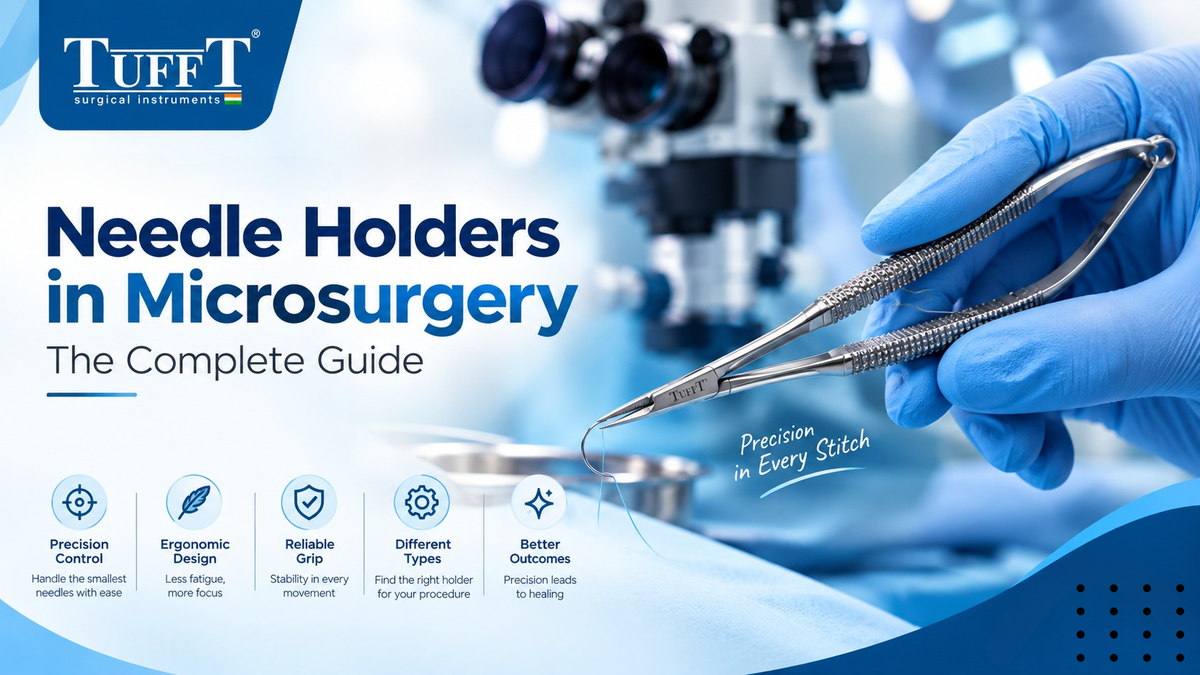
A needle holder is a surgical instrument designed to securely grip and manipulate a suture needle during suturing. It generally has two handles, a hinged joint, jaws for gripping the needle and a locking mechanism that keeps the jaws closed.
Unlike ordinary forceps, a needle holder is built to provide a firm grip on the needle. This is important because the surgeon needs to control the needle's direction while passing it through tissue.
A needle holder forceps may look similar to other ring-handled instruments, but the jaws are specifically designed for needle control. The correct amount of grip is important. Too little can allow the needle to rotate or slip, while excessive force may damage a delicate needle.
Common Types of Surgical Needle Holders
There is no single needle holder that works perfectly for every procedure. Size, jaw design, needle type and the nature of the tissue all influence the choice.
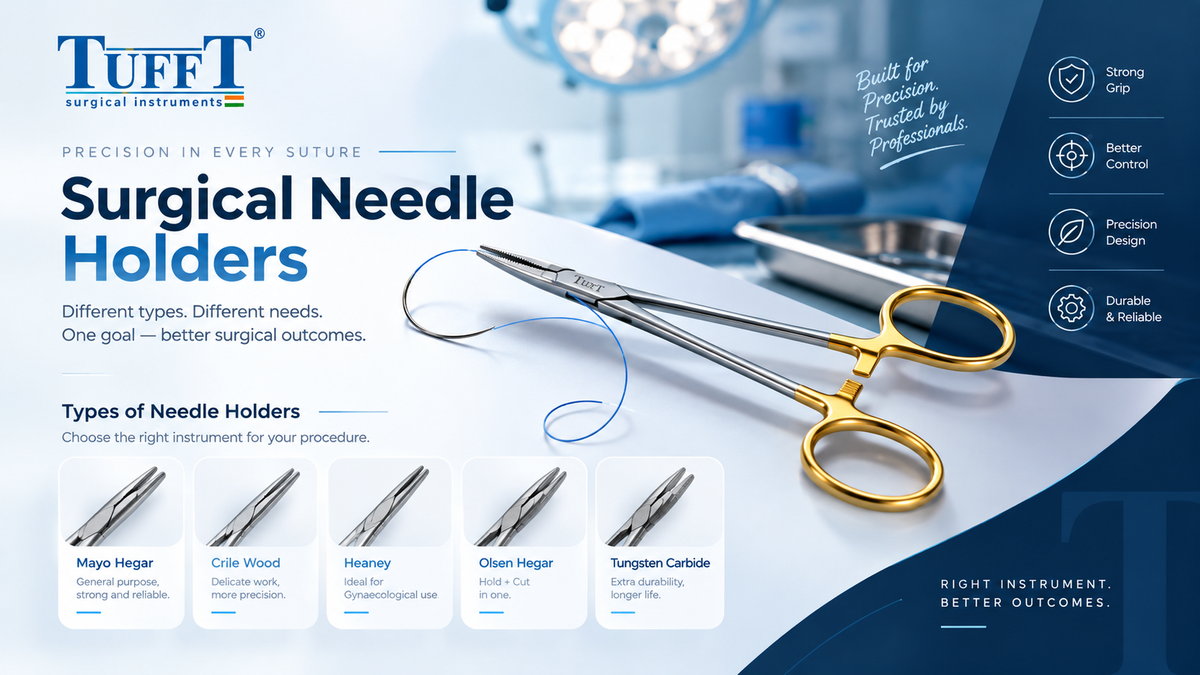
1. Mayo Hegar Needle Holders
Mayo Hegar needle holders are among the most commonly recognised needle holders in general surgery. They have a sturdy construction and are suitable for handling medium to larger suture needles.
The design provides a strong grip and is practical for a wide range of routine suturing tasks. A Mayo needle holder is often considered a dependable general-purpose option because it is available in different lengths and sizes.
For procedures where the surgeon needs a firm hold rather than extremely delicate manipulation, the Mayo Hegar design is often a sensible choice.
2. Crile Wood Needle Holder
The Crile Wood needle holder is generally associated with more delicate suturing. Its slimmer profile and fine serrated jaws can provide greater control when working with smaller needles.
This makes it useful in procedures where precision matters and a heavier instrument may feel unnecessarily bulky.
The choice between a Crile Wood and Mayo Hegar often comes down to the needle being used, the type of tissue involved and the surgeon's preferred handling characteristics.
3. Heaney Needle Holder
Heaney needle holders have a distinctive design and are commonly associated with gynaecological procedures. Their jaws and overall construction are intended to provide secure needle control, particularly when working in deeper surgical fields.
The right length and jaw configuration can make a noticeable difference when visibility and access are limited.
4. Olsen Hegar Needle Holder
The Olsen Hegar combines two functions in one instrument: needle holding and suture cutting. This can be convenient when the surgeon needs to secure the needle and then cut the suture without changing instruments.
It is particularly useful when reducing instrument changes can make the workflow more efficient. Combination instruments should still be selected according to the specific procedure and the surgeon's preference.
5. Tungsten Carbide Needle Holders
For facilities looking for additional durability, tungsten carbide or TC needle holders are another option. These instruments have carbide inserts in the jaws, which can provide a firm, consistent grip and improved wear resistance.
They are available in several needle-holder designs, including Mayo Hegar and Crile Wood styles. The higher initial cost can make sense in settings where instruments are used frequently and long-term performance is important.
Needle Holders for Surgical and general surgery Use
The requirements for needle holders surgical general surgery applications can differ from those in general surgery. general surgery procedures often involve smaller working areas and finer sutures, so control and appropriate instrument size become particularly important.
A smaller needle holder can provide better access and handling in confined areas. In contrast, larger surgical closures may require a stronger, heavier instrument.
This is why buying a needle holder simply because it is commonly used may not be enough. The instrument should match the needle, suture material and procedure.
What Should You Look for in a Needle Holder?
A good needle holder instrument should feel secure in the hand while allowing controlled movement. Several factors deserve attention.
Jaw Design
The jaws should grip the needle securely without unnecessarily damaging it. Serration pattern and jaw alignment can affect how consistently the needle is held.
Size and Length
A small holder may provide better control for fine work, while a longer instrument can be useful when the surgical field is deeper. Choosing the correct length also helps avoid awkward hand positioning.
Locking Mechanism
The ratchet should engage smoothly and release without excessive force. A poorly functioning lock can affect both control and hand comfort during longer procedures.
Material
Surgical-grade stainless steel is widely used because it offers strength and corrosion resistance. Tungsten carbide inserts are another option where greater jaw durability and grip are desired.
Ergonomics
Comfort matters more than it may seem. Surgeons and general surgery professionals may handle instruments repeatedly during long procedures. An appropriately balanced instrument can reduce unnecessary hand strain and make precise work easier.
Needle Holders vs. Surgical Scissors
Needle holders and surgical scissors perform completely different jobs, even though both may have a similar ring-handle appearance.
A needle holder is designed to grasp and control a suture needle. Surgical scissors are designed for cutting tissue, sutures or other materials depending on their construction.
For example, Hardage scissors are a separate category of surgical scissors and should not be treated as an alternative to a needle holder. Some combination instruments, such as Olsen Hegar models, incorporate both needle holding and cutting functions, but they are still specialised instruments.
How to Choose the Right Needle Holder
Start with the procedure rather than the brand name.
Consider the size and type of needle being used, the depth of the surgical field and how much precision the procedure requires. For routine suturing with medium or larger needles, a Mayo Hegar may be appropriate. For finer work, a Crile Wood or another delicate holder may provide better control.
It is also worth considering the frequency of use. Instruments used regularly should have reliable construction, accurate jaw alignment and a locking mechanism that continues to perform consistently after repeated cleaning and sterilisation.
Proper maintenance is equally important. Instruments should be cleaned, sterilised and dried according to the manufacturer's instructions. Regular inspection can help identify worn jaws, loose ratchets or other issues before they affect performance.
Why Instrument Quality Matters
A surgical instrument is not just a piece of metal on a tray. Its design directly affects how it behaves in the hand.
A needle holder that does not grip consistently can make suturing frustrating and may encourage the user to apply unnecessary pressure. A well-made instrument should provide predictable handling and allow the user to focus on the procedure rather than adjusting the tool.
TUFFT offers different types of surgical instruments, including Mayo Hegar, Crile Wood and other needle-holder designs. The company's range also includes surgical scissors and other general instruments.
For professionals comparing options, reviewing the instrument's specifications, intended application, material and construction is more useful than choosing based solely on appearance or price.
Final Thoughts
Choosing the right needle holder comes down to matching the instrument with the job. A Mayo needle holder may be an excellent general-purpose choice, while a Crile Wood needle holder can be better suited to finer suturing. Specialised designs, including tungsten carbide and combination holders, offer additional options when durability or multifunctionality is important.
Understanding these differences Tufft helps surgical and general surgery professionals build instrument sets that are practical, comfortable and suited to the procedures they perform.
FAQ
1. What is the main purpose of a surgical needle holder?
A surgical needle holder is used to securely grip and control a suture needle while stitching tissue. It allows the surgeon to guide the needle accurately without holding it directly with their fingers.
2. What is the difference between Mayo Hegar and Crile Wood needle holders?
Mayo Hegar holders are generally more robust and commonly used for medium to larger needles. Crile Wood holders have a finer design and are often preferred for delicate suturing where greater precision is needed.
3. Can the same needle holder be used for general surgery and general surgical procedures?
It can be possible, but the appropriate size and design depend on the procedure and needle being used. general surgery often require smaller, more precise instruments because of the limited working space.
4. Are tungsten carbide needle holders better than stainless steel ones?
Tungsten carbide inserts can provide excellent grip and improved resistance to jaw wear. They can be a useful choice for frequently used instruments, although the best option depends on the procedure, budget and expected workload.
5. How should a needle holder be maintained?
A needle holder should be cleaned, sterilised and dried according to the manufacturer's recommended procedure. Regularly inspect the jaws and ratchet for wear, misalignment or damage, and remove instruments from service when they no longer function properly.

Team TUFFT is the editorial and expert content team behind TUFFT, dedicated to sharing insights, innovations, and industry knowledge in the field of surgical and medical instruments. Backed by experienced professionals, skilled engineers, and a commitment to quality, Team TUFFT creates informative content focused on surgical excellence, healthcare advancements, and precision manufacturing.