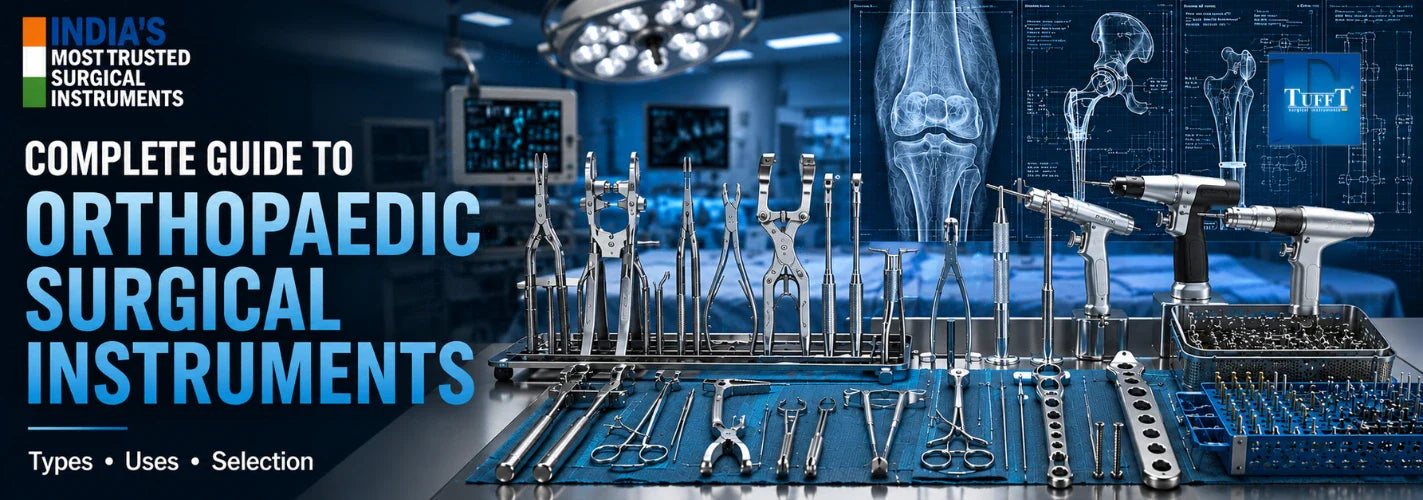
Complete Guide to Orthopaedic Surgical Instruments: Types, Uses & Selection
What Are Orthopaedic Surgical Instruments?
Orthopaedic surgical instruments are specifically designed for bone and joint surgery. Unlike general surgical instruments, these tools handle completely different demands. You're working with hard tissue. You're applying significant force. You need instruments that don't break, slip, or deform under pressure.
These instruments must meet recognised international quality standards. That means verified dimensions, tested materials, and documented manufacturing processes. Most quality orthopaedic instruments use materials that withstand repeated sterilisation cycles and maintain their structural integrity. Working with instruments thousands of times over the years, you notice which ones stay reliable and which ones gradually fail.
Common Types of Orthopaedic Surgical Instruments
I've used these instruments consistently. Let me explain what actually makes each one valuable.
Bone Clamps and Holders
These grip bone fragments during fracture repair. The serrated jaw design prevents slipping when you're holding a femoral head or tibial plateau. Bad bone clamps mean your reduction moves during fixation. That ruins your work. I've watched surgeons restart procedures because the clamp slipped.
Surgical Retractors
Surgical instruments retractors come in various designs. Hohmann retractors work well for soft tissue retraction. Self-retaining retractors like Balfour systems keep exposure open during major procedures without constant assistant involvement. Choosing the right retractor makes visibility during surgery genuinely easier. The ergonomic handle design matters more than you'd think when you're holding something for two hours straight.
Bone Drills and Cutting Guides
Precision drilling determines screw placement accuracy. Poor quality drills wander slightly, throwing off your trajectory. That means revision surgery later. Quality drills with proper guides keep you on track.
Forceps and Grasping Instruments
Allis tissue forceps work for soft tissue handling. Reduction forceps with specific jaw designs grip bone fragments without crushing them. Using the wrong forceps creates unnecessary fracture site trauma.
Bone Saws and Cutting Instruments
Oscillating saws cut bone cleanly. Reciprocating saws handle tougher work. Bone chisels and osteotomes require proper sharpness. Dull cutting instruments require excessive force, which heats bone tissue and delays healing. I've seen the healing difference between cuts made with sharp versus dull instruments.
Plate and Screw Systems
Screwdriver handles, plate holders, and screw guides need precision tolerances. Stripping a screw head wastes time and frustrates everyone. Quality instruments maintain proper engagement consistently.
Needle Holders and Suturing Equipment
Quality needle holder designs prevent needle slipping during closure. Proper needle holders speed up wound closure and reduce damage to surrounding tissue.
Key Instruments in Common Orthopaedic Procedures
Fracture Repair
Bone clamps, reduction forceps, drills, and plate systems work together. Proper reduction, solid fixation, and accurate screw placement determine whether the patient recovers normally. We've seen operating times drop by twenty minutes once we invested in quality instruments across our fracture list.
Joint Replacement
Hip and knee replacements demand precision cutting guides, retractors that provide excellent exposure, and instruments that maintain alignment during cement application. One loose retractor means compromised visibility and increased operative time.
ACL Reconstruction
These arthroscopic procedures need specialised instruments. Poor quality arthroscopic graspers don't work well. Guides that misalign mean tunnel placement problems. I've watched surgeons request specific instruments for ACL work because they know which ones perform consistently.
Spinal Surgery
Cervical and lumbar procedures require excellent retraction, precise drilling, and accurate screw placement. There's no margin for error with spinal work. Instrument reliability becomes critical.
Orthopaedic Diagnostics
Arthroscopy uses specialised optics and small precision instruments. These tools absolutely need quality manufacturing because they're delicate and expensive.
Why Instrument Quality Affects Real Outcomes
Quality instruments reduce procedure time. That matters. Shorter anaesthesia time means less risk for patients. Better instruments mean faster recovery.
Dull cutting instruments heat bone tissue during cutting. That actually delays fracture healing. I've reviewed healing outcomes at multiple hospitals. The ones using quality instruments consistently showed better radiographic healing at six weeks.
Instruments that slip or fail force procedure restarts. That extends anaesthesia time and increases infection risk. Poor bone clamps that slip during fixation mean the reduction isn't solid. That creates complications later.
Corrosion resistance matters for instruments that contact bone and potentially bloodstream. Proper sterilisation shouldn't damage quality instruments, but it degrades cheap ones noticeably within fewer cycles than expected.
Manufacturer documentation and verified quality standards mean someone actually checked manufacturing quality. It's not just marketing. It means documented processes and quality testing.
Choosing Reliable Surgical Instruments Suppliers
Don't go cheap. Hospital procurement teams often make this mistake. I've seen it cost far more in instrument replacements and complications.
Find suppliers with documented quality systems and proper certifications. Ask about materials and request specifications about material durability and strength. TUFFT maintains full traceability of materials and manufacturing processes, which is genuinely impressive when you're reviewing supplier documentation. That level of transparency matters when you're responsible for patient safety.
Ask for hospital references. Call them. Ask specific questions about replacement policies when instruments fail. Reliable suppliers respond quickly to quality issues. TUFFT's customer support has impressed me with their responsiveness when we've had questions about specifications or needed replacements.
Product range matters. Sourcing complete orthopaedic instrument sets from one quality-verified supplier reduces inconsistencies from mixing different manufacturers. TUFFT's orthopaedic instruments collection covers the full range needed for most procedures. When we switched procurement to consolidate suppliers, having one comprehensive range simplified everything significantly.
Final Thoughts
Your orthopaedic instruments directly affect patient outcomes and recovery times. Better instruments mean faster procedures, better fixation, and fewer complications. It's not glamorous, but it's real. After years of working with various suppliers, investing in quality from manufacturers who actually understand orthopaedic requirements makes a tangible difference. Your patients will benefit from that choice. When you're ready to evaluate options, contact us.
FAQ
1. What are orthopaedic surgical instruments?
Specialised tools designed for bone and joint surgery, made from durable materials engineered to withstand significant surgical force and repeated sterilisation.
2. Why does instrument quality impact patient outcomes?
Quality instruments reduce procedure time, prevent excessive bone heating, ensure better fixation, and lead to faster healing and fewer complications.
3. What are the main types of orthopaedic surgical instruments?
Bone clamps, retractors, drills, forceps, bone saws, plate systems, and needle holders—each serving specific functions in different surgical procedures.
4. What should I look for in reliable suppliers?
Look for suppliers with documented quality systems, proper certifications, material traceability, hospital references, responsive customer support, and comprehensive product ranges.
5. How do dull instruments affect bone healing?
Dull instruments generate excessive heat during cutting, damaging bone tissue and delaying fracture healing. Sharp, quality instruments perform cleanly and support better outcomes.
6. Why does instrument durability matter for orthopaedic surgery?
Orthopaedic procedures apply significant force to instruments. Poor durability means instruments fail during procedures, forcing restarts that extend anaesthesia time and increase infection risk.

Team TUFFT is the editorial and expert content team behind TUFFT, dedicated to sharing insights, innovations, and industry knowledge in the field of surgical and medical instruments. Backed by experienced professionals, skilled engineers, and a commitment to quality, Team TUFFT creates informative content focused on surgical excellence, healthcare advancements, and precision manufacturing.